5 Ways Mexican Food Can Be Part of a Healthy Diet
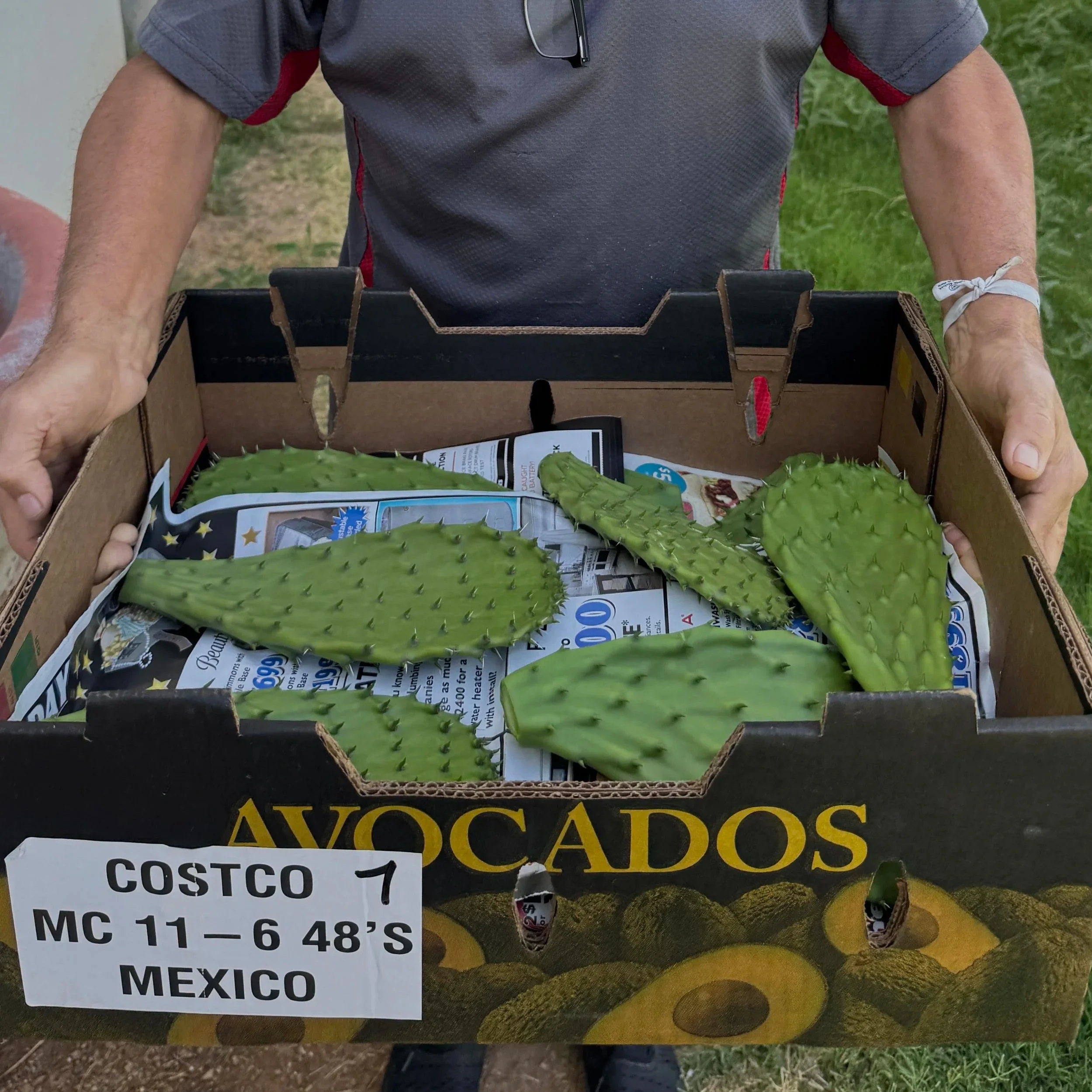
Freshly harvested nopales
If you grew up in a Mexican household, you probably heard at some point that your food was "too heavy," "too greasy," or just plain unhealthy. And maybe you even believed it for a while. I know I did. But here's what no one was telling us: traditional Mexican food, at its core, is incredibly nutritious. Let's talk about why.
1. Plants, Plants, and More Plants!: Our Fiber Bestie
Traditional Mexican dishes include a variety of plants, giving us lots of color, variety, and fiber. Think masa, maíz, avocados, garbanzos, tortillas de maíz, lentejas, frijoles, habas, and so much more! Did you know that one cup of pinto beans offers 15 grams of fiber? That's more than half of our minimum daily requirement! And let's not forget that we add salsa to almost everything. That's literally blended vegetables.
The key is opting for higher-fiber options like legumes, whole grains, fruits, and vegetables. Simple swaps go a long way: boost your Mexican red rice by stirring in peas and corn, or add avocado on the side. Choose corn tortillas over flour when you can, or pair a flour tortilla with a fiber-rich food to make up the difference (see what I'm doing here?).
Aiming to fill half your plate with non-starchy vegetables is a great strategy for both fiber and portion control, and it doesn't have to be a boring side salad, amigas. Try adding more repollo and avocado to your pozole, extra carrots and calabacitas to your picadillo, or carrots and avocado to your sopa de fideo. Small, intentional swaps make a big difference while still honoring the flavors you love.
2. Culture and Familiarity: Makes It Feel Less Like a "Diet"
Raise your hand if you've tried a diet that was nothing but salads, brown rice, unseasoned chicken, and boiled vegetables, convinced it was healthier than Mexican food. Been there. There's nothing wrong with those foods, but they don't carry the flavor profile most of us grew up with.
Many people believe that the further they stray from their cultural foods, the healthier they're eating. But what actually happens is we strip away the memories and joy that food carries. Most diets fail because people go to extremes, going too far from what feels familiar. Those drastic changes can be incredibly hard to sustain.
Finding small, simple swaps lets you keep eating your favorite foods, making it far more realistic to build healthier habits long-term.
3. Emotional Connection: Physical AND Mental Health Matter
Food is about so much more than how it affects us physically. We could follow the "perfect" diet and still feel empty if it's missing the flavors and memories we love. Food is family. Food is culture. Food is connection.
I've been cooking with my mom more lately, which is actually how my series, where she teaches me traditional Mexican dishes, was born. And let me tell you, I have never felt so connected to her. We had a rocky relationship during my teen years, and bonding over the food she made me growing up, while hearing stories from her youth, has been incredibly healing. That is the kind of emotion we want from our food.
Making healthy lifestyle choices doesn't mean erasing your culture. I'd actually encourage you to do the exact opposite.
4. Portions: Are Tortillas Bad, or Is It the Amount?
This is the number one thing I hear from clients: they've cut out tortillas completely to improve their health. And I get it, but let's talk about it.
Yes, tortillas in excess can be problematic depending on your goals: whether it's weight management, blood sugar control, and so on. But honestly, isn't that true of pretty much every food? So why do we villainize tortillas specifically?
Growing up, I’ve had the opportunity to visit family in Guanajuato, México. Both of my parents grew up on farms, and when we'd drive to the pueblo for corn tortillas, we'd come back with 1–2 kg, enough to last maybe a day or two, with each person eating roughly 8–10 corn tortillas per meal.
From conversations with my community, I've learned that corn tortillas were often the most affordable and accessible option for families. My mom and her seven siblings would eat corn tortillas, beans, and verdolagas as a full meal. Because that's what was available, they ate more of it. For many, that became a lifelong habit even as other foods became accessible.
Here's the truth: corn tortillas are not "bad," and no single food causes chronic illness. It really comes down to quantity and context. Corn tortillas are actually a whole grain, contain fiber, and are enriched with folate, which supports pregnant mothers in preventing neural tube defects like spina bifida (isn’t nutrition engineering so cool?). You can absolutely eat tortillas daily and still see improved health outcomes. A typical portion is about 3 corn tortillas, though that varies by individual needs.
5. Cooking Methods: Small Changes, Big Impact
One of the most common pushbacks I get is that Mexican food uses too much lard and oil. And sure, that can be true, but it's also true of plenty of other cuisines.
Swapping lard and butter for plant-based oils has been shown to improve cardiovascular health markers, including reducing LDL ("bad") cholesterol, which contributes to plaque buildup, or atherosclerosis. Plant oils are rich in poly- and monounsaturated fatty acids, which support heart health. One note: tropical plant oils like coconut, palm, and palm kernel oil are still high in saturated fat, so those are worth limiting.
So if plant oil is beneficial, what's the issue? Frying typically requires far more oil than the standard 2-tablespoon serving, making it easy to rack up extra calories, which over time, can contribute to weight gain and metabolic concerns. If frying is on the menu, a non-tropical, heat-stable plant oil is the better choice, but it's still worth limiting. Alternatives like air frying, baking, light sautéing, steaming, boiling, or grilling can give you similar results, taste-wise, with less oil.
Every body is different, and some people will need more or fewer modifications based on their individual health and goals. But at their core, our traditional dishes are colorful, rich in flavor, and deeply nutritious.
XO,
Leslie Saldana, MS, RDN | SaldanaNutrition
References
Valerino-Perea S, Armstrong MEG, Papadaki A. Adherence to a traditional Mexican diet and non-communicable disease-related outcomes: secondary data analysis of the cross-sectional Mexican National Health and Nutrition Survey. Br J Nutr. 2023;130(7):1206-1216.
Dahl WJ, Stewart ML. Position of the Academy of Nutrition and Dietetics: health implications of dietary fiber. J Acad Nutr Diet. 2015;115(11):1861-1870.
Lichtenstein AH, Khera A, Anderson CAM, et al. 2026 dietary guidance to improve cardiovascular health: a scientific statement from the American Heart Association. Circulation. 2026;153(13):e531-e558.
Flores AL, Cordero AM, Dunn M, et al. Adding folic acid to corn masa flour: partnering to improve pregnancy outcomes and reduce health disparities. Prev Med. 2018;106:26-30.
Juárez-Ramírez C, Théodore FL, Villalobos A, et al. The importance of the cultural dimension of food in understanding the lack of adherence to diet regimens among Mayan people with diabetes. Public Health Nutr. 2019;22(17):3238-3249.