Do All Foods Need to Be the “Healthiest” Option? A Mexican-American Dietitian Weighs In
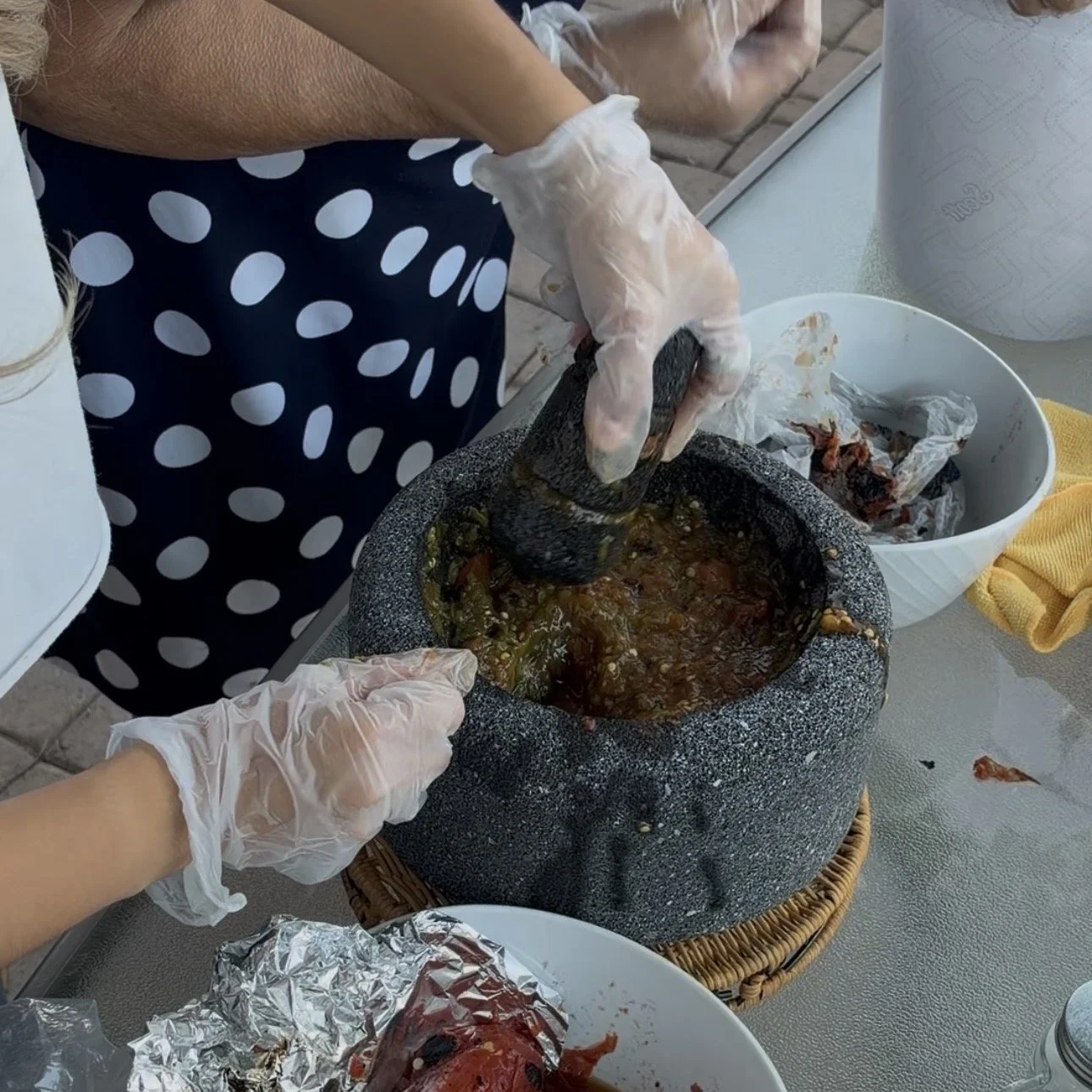
Making salsa de molcajete with my Tia Manuela
I spent six years studying nutrition science and have been a board-certified registered dietitian nutritionist for a little over a year now. Helping people improve their eating habits is my job. But dietitians aren’t the “food police,” and most of us don’t aim for “perfect” eating. Nutrition is complex, and health outcomes go beyond weight management and chronic disease prevention. So is eating healthy purely a personal choice? Not really.
Nutrition Factors to Consider:
Our Relationship with Food
My body dissatisfaction started at age 6, long before I had access to social media. It came from listening to loved ones talk about their own bodies and other people’s. I learned that “gordita” was something negative. You could hear the difference in tone when elders called one cousin “gordita” and another “flaquita,” even if they insisted it was all out of love. Kids can feel that. I felt that.
As a teen, online pro-eating-disorder content reinforced the idea that something was wrong with my body. I became obsessed with exercise and “healthy” eating, and by 14 it had become a full-blown eating disorder. Later, gym bros told me to cut broccoli because the carbs would make me fat, among other ridiculous unsolicited nutrition advice. I believed them because I didn’t yet know how little they understood about nutrition. Thanks to my awesome therapist and consistent sessions, I fully recovered. The eating disorder to dietitian pipeline is real, and I’ve done a lot of work to recognize my internal biases without it affecting the care I provide.
Cultural Foods
Even in college, I struggled with my own cultural foods. My education centered on Eurocentric eating, with the Mediterranean diet as the gold standard. Only about 3% of RDs identify as Hispanic or Latino, so I rarely saw dishes like mine represented, and I felt that “ni de aquí ni de allá” feeling pretty often. That changed in 2022, when I began working with the Hispanic and Latino community and learned from brilliant Latina RDs. This safe space celebrated cultural foods and built them into every patient’s health plan. That’s where I started healing my relationship with my cultural foods.
Diet Culture and Misinformation
Diet culture has shaped how people relate to food for far too long. When someone uses words like “clean,” “non-toxic,” or “wellness,” or promises a magic fix through supplements they profit from, that’s a red flag. You may not even notice it, but these mixed, often inaccurate nutrition messages can impact how you eat.
Access to Food, Kitchen, and Storage
Many people say “just eat more vegetables” or “just eat more whole foods,” but never consider your schedule, routine, food environment, and overall access to food. Many people live far from a grocery store, lack reliable transportation, or can’t afford fresh food that spoils quickly. Others don’t have a full kitchen or enough fridge and freezer space to store it. Sometimes the most nutritious option is canned beans, frozen vegetables, or shelf-stable foods that fit your budget and storage. Those foods count.
Ability to Cook
Cooking takes time, energy, equipment, and skill, and not everyone has all four. Long work hours, caregiving, disability, or burnout can make a home-cooked meal unrealistic. Many of us also never had anyone teach us. A simple, convenient meal is not a failure. It’s often the best choice available.
Nutrition Beyond “Wellness”
Nutrition is more than the health benefits it provides. My job is to help people improve their health outcomes, but here’s what I’ve learned: strict food rules and extreme diets don’t work. They often lead to yo-yo dieting or a binge-restrict cycle, and they take a real toll on your mental health and quality of life.
So how do we avoid this? Start by moving weight goals out of the center. Ask what else nutrition could do for you. Could it help you move more comfortably? Give you steadier energy to play with your kids? Help you connect with others? Help you reconnect with loved ones? Food is fuel, but that’s not the whole story. I challenge you to reflect on the foods that make you nostalgic, the ones that nourish your soul, and to learn recipes from the people who came before you.
Work With Me
If you want 1:1 support from a Latina dietitian who gets it, I’d love to help. Together, we’ll build an approach to nutrition that fits your cultura, your budget, and your real life.