Fiber 101: A Mexican Dietitian's Guide
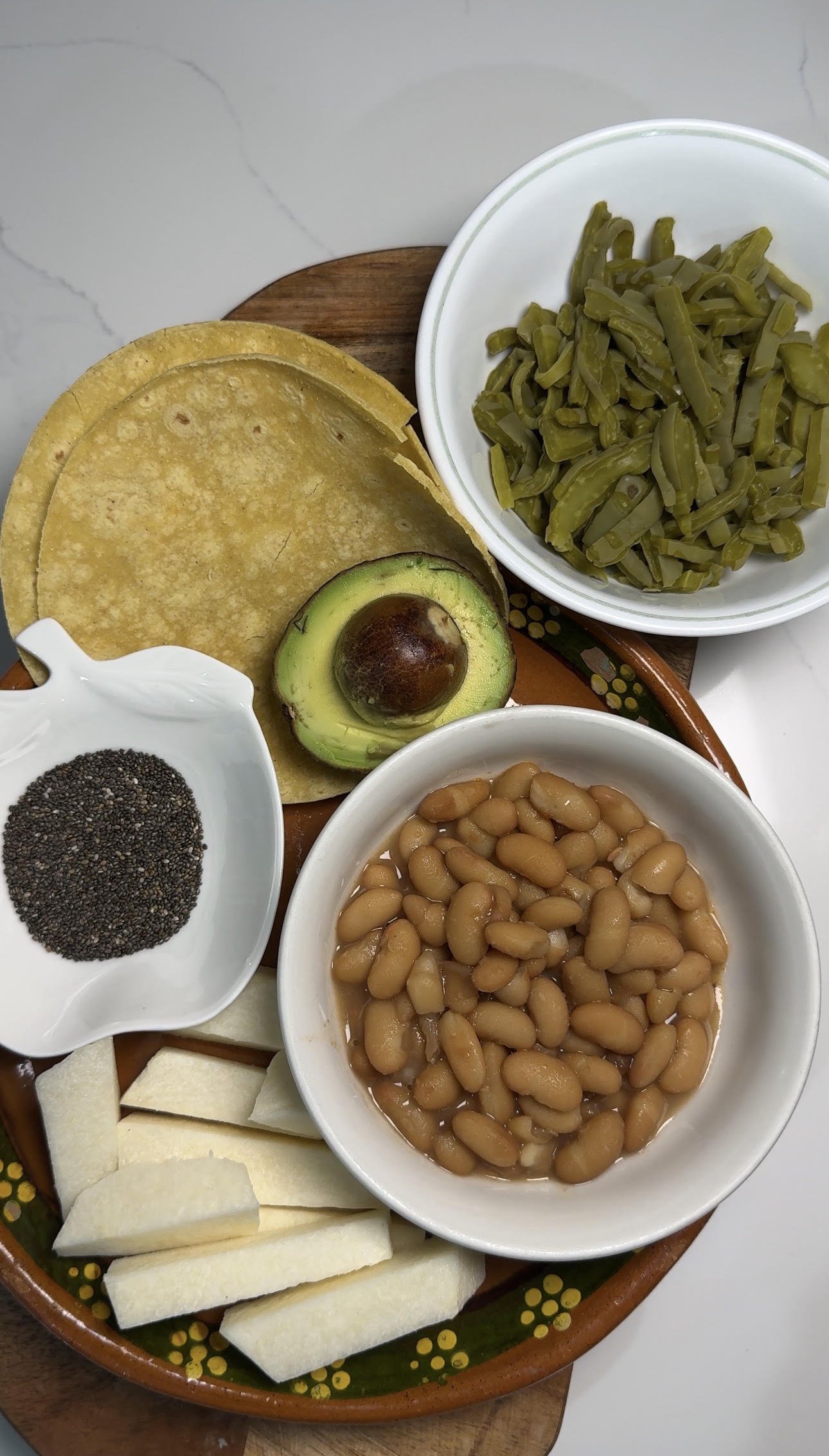
What 40 grams of fiber looks like in a Mexican household.
Fiber is one of the most powerful tools for better health, and it's found in so many traditional ingredients used in Mexican dishes. Here's what fiber is, why it matters, and ways to eat more of it.
What Is Fiber?
Fiber is the part of plant foods your body can't digest or absorb. Instead of being broken down like other carbohydrates, it passes through your digestive tract largely intact, doing important work along the way. You'll only find it in plants: vegetables, fruits, whole grains, beans and lentils, nuts, and seeds. There's no fiber in meat, dairy, eggs, or oils.
There are two main types, and you need both:
Soluble fiber dissolves in water and forms a gel. This slows digestion, helps steady blood sugar, and lowers cholesterol. Find it in beans, oatmeal, nopales (cactus), chia seeds, and avocados.
Insoluble fiber doesn't dissolve. It adds bulk to stool and helps things move through your gut, preventing constipation. Find it in beans, whole grains, whole corn kernels, masa for corn tortillas and sopes, hominy, calabacitas, chayote, radishes, jalapeños, and poblano peppers.
Most plant foods contain a mix of both (like beans!), so a varied diet naturally gives you a good balance.
Why Fiber Matters
Eating more fiber isn't just about staying "regular," though it helps with that too. Large reviews of research involving millions of people consistently link higher fiber intake to a lower risk of some of the most common serious health problems in our communities.
Heart health: Diets rich in fiber are tied to lower rates of heart disease and stroke, and higher fiber intake can modestly lower blood pressure and cholesterol.
Blood sugar: Fiber slows how quickly sugar enters the bloodstream, helping with glucose control and lowering the risk of type 2 diabetes.
Digestive health: Fiber supports regular bowel movements, feeds the beneficial bacteria in your gut, and is linked to a lower risk of diverticular disease and colorectal cancer.
Weight: High-fiber foods are filling, which can help with appetite control and healthy weight.
How Much Do You Need?
General targets for adults are:
Women: about 25 grams per day
Men: about 38 grams per day
A simple rule of thumb is roughly 14 grams of fiber for every 1,000 calories you eat.
After reading all of these amazing health benefits fiber has to offer, can you believe that most people still aren't getting enough? The average American eats only 15–17 grams of fiber a day, and fewer than 1 in 20 adults meets the recommended amount—about half of what we actually need.
The Mediterranean diet gets most of the credit for being fiber-rich, but our cuisine deserves a seat at the same table. Traditional Mexican cooking is built on the same plant-forward staples, and studies link it to lower cholesterol, insulin, and inflammation.
It starts with beans. Beans have been a staple for generations. They're affordable, plant-based, and far more nourishing than many realized. Beans are packed with fiber and rich in lysine, the amino acid grains lack; paired with rice, they complement each other into a high-quality, protein-rich meal at a very affordable price.
Easy Ways to Get More Fiber
Supplements may help, but I'd recommend starting with food first.
Sample day of what 40 grams of fiber could look like in a Mexican household
Breakfast — Classic Avena with cinnamon (½ cup dried oats + 1 tbsp ground or soaked chia seeds): ~9 g fiber
Lunch — Huevos a la Mexicana with 1 cup nopales, ½ cup beans (de la olla or lightly refried), and 2 corn tortillas: ~12 g fiber
Dinner — Picadillo (50/50 lean ground beef and lentils) with Mexican red rice: ~8 g fiber
Snack — Jicama with guacamole (1 cup jicama, ½ avocado): ~13 g fiber
Total: ~42 g fiber
A Few Practical Tips
Go slow. Adding too much fiber too quickly can cause bloating, gas, and cramping. Increase gradually over a few weeks to let your gut adjust. Adding 5 grams of fiber per week is a great starting point.
Drink water. Fiber works best with plenty of fluid.
Choose food first. Whole foods give you fiber plus vitamins, minerals, and other nutrients. Fiber supplements can help fill gaps but aren't a substitute for a varied, plant-rich diet.
XO,
Leslie Saldana, MS, RDN | SaldanaNutrition
References
Dahl, Wendy J., and Maria L. Stewart. "Position of the Academy of Nutrition and Dietetics: Health Implications of Dietary Fiber." Journal of the Academy of Nutrition and Dietetics, 2015.
Messina, Virginia. "Nutritional and Health Benefits of Dried Beans." American Journal of Clinical Nutrition, 2014.
Reynolds, Andrew, et al. "Carbohydrate Quality and Human Health: A Series of Systematic Reviews and Meta-Analyses." The Lancet, 2019.
Santiago-Torres, Margarita, et al. "Development and Use of a Traditional Mexican Diet Score in Relation to Systemic Inflammation and Insulin Resistance Among Women of Mexican Descent." The Journal of Nutrition, 2015.
Veronese, Nicola, et al. "The Impact of Dietary Fiber Consumption on Human Health: An Umbrella Review." Clinical Nutrition, 2025.